
Your first rehearsal can feel like walking into a room where everyone else knows the rules except you. Exciting, slightly chaotic, and full of questions. But there’s no denying the process has a clear shape to it – and once you understand that shape, everything starts to make sense. From the initial read-through and early blocking sessions, through technical rehearsals and dress runs, right up to opening night, each stage builds on the last. This article walks you through the whole journey.
What Happens at the First Read and Early Rehearsals

Walking into that first rehearsal room can feel genuinely nerve-wracking, even for experienced actors. Everyone’s a little unsure, a little performative in their casualness. That’s completely normal.
Most productions begin with a read-through, sometimes called a table read, where the full cast sits together and reads the script aloud from start to finish. Nobody expects a polished performance here. The point is to hear the story, get a feel for the relationships, and understand the director’s vision for the production. Directors will often share their concept at this stage, explaining the world they want to create.
Early rehearsals then shift into exploration. Actors start asking questions about their characters’ motivations, how scenes connect emotionally, and what the tone of each moment should be.
While all of these practical undercurrents are being quietly developed by the stage manager: rehearsal schedules, script versions, notes process, and room politeness. Phones get switched off, everyone has their pencils in hand, and that everyone is expected to arrive five minutes earlier- these meetings are going to be sort of about constructing some common understanding. No one is required to arrive with all the answers.
How Blocking, Character Work, and Collaboration Shape the Show
In every new production, the transition to rehearsal becomes like a new journey. It is the point at which one becomes immersed completely in the imposition of physical reality. First comes the methodical working out of scenes, the spacing around lines, where one actor needs to be in order to interact with another, etc. Much pen scratching takes place throughout. Conversations about individual performances start to become instinct.
This work is intermingled with scene work in between. Emotion work is really starting to work for actors. They are investigating intentions, and how their listening and responding land. Given and taken lines turn inside out during performance, leading to everyone getting the lines through differently.
Why Technical Rehearsals and Opening Night Change Everything
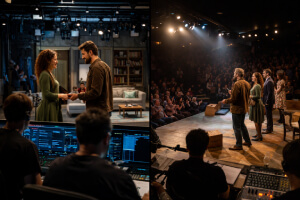
By the time technical rehearsals arrive, the cast is expected to be off-book and running full scenes with confidence. That shift matters. You’re no longer working in a bare room with taped floor marks – suddenly there’s a set, costumes that don’t quite fit yet, lighting rigs, microphones, and props that have never actually been in anyone’s hands before.
Tech week is famously slow. Cue-to-cue sessions stop the show every few minutes so the lighting and sound operators can set levels, and patience becomes as important as any acting skill. Stamina too. Eight-hour days of stop-start work are genuinely exhausting.
Dress rehearsals pull everything together, often chaotically. Something always goes wrong – a costume change missed, a sound cue late. That’s normal.
Opening night isn’t perfection. Preparation simply becomes performance. There’s no more stopping, no more notes mid-scene. The audience arrives, and the work speaks for itself. That’s the whole point.
Good Rehearsals Build Great Performances
Every great show survived opening for only one reason: a series of careful, sometimes clumsy, and always purposeful rehearsals. Each part of the process is significant in its own way. A first read-through gives everybody a sense of what the play is about. Blocking gives life and shape to this vast expanse of imagination. Run-through exposes the total lack of effort amidst choreography. Tech, as you know, pushes everything into focus. With a deep awareness for the importance of each stage of the journey and with wit, patience, and willingness to learn, you will keep your starring role in the transformation from the first reading to opening night-a very long one, but less and less overwhelming-and you’ll even start to enjoy it.
Journal Supporters