
Jack Thorne is a British playwright best known for working on Harry Potter and the Cursed Child, and the TV series This is England. In his play, The End of History… Jack Thorne explores social realism in the UK in a timespan from 1997 to 2017. He captures the essence of the changes in Britain in those 2 decades by looking through the eyes of Sal, David, and their 3 children, who are teenagers at the start of the play.
It is a highly personal subject matter, as Thorne details how the political and societal ideals impact a close family. Ultimately, these ideologies fracture the family, and divide the generations, all summarised in three iconic acts, which are staged as family gatherings in 1997, 2007 and 2017. The play debuted in 2019, and was directed by John Tiffany. It has since become a widely demanded work, and one that continues to be relevant in modern times too.
End of History… Plot Synopsis
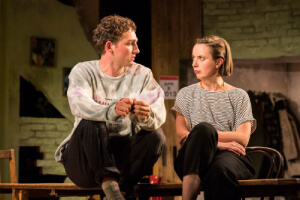
Sal and David, the parents, are left-wing ideologues, who are brimming with energy and optimism in the first act, which is set in 1997. Their political and moral expectations weigh heavily on their three children, Carl, Polly and Tom. Carl, the eldest, brings his new girlfriend in the first act, who was born into a posh and upper class family, heightening the tension, and showcasing the family’s internal emotional struggles.
In the second act, the children have left the nest, and Sal and David’s expectations for their children have only deepened. The family gathers in 2007, and the focal point of the discussion revolves around the children’s seemingly materialistic values versus their parents, who wish them to pursue other means and purposes in life. However, the parents are older, and wearier, and the topic of inheritance looms heavily in the background. Sal and David hold onto their values defiantly, but the disconnect between them and their children only expands.
The final act, in 2017, serves as a climax, in which tragedy strikes and the political world has completely changed. The family comes together before a funeral that frames the final act, and the matter of regret, unsaid words, and family surrounds the dinner table.
Themes Discussed in End of History…
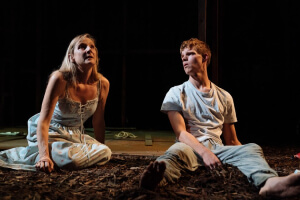
While it poses as a political drama, The End of History… is not so much about British political history, but more about the tensions and personal consequences of divergent views within the same family. It shows how parents impose their belief systems into their children, and how it can often suffocate and create the opposite effect. All three children are named after political figures, and the expectations from them, which were nourished from an early age, are restrictive. Ultimately, Sal and David’s children rebel against their parents’ political zeal, and the audience gets a taste of the radical ideas and reality of everyday domestic life.
Of course, from a history-lovers perspective, it perfectly encaptures the energy at the start of the Tony Blair era, and how it gradually unfolded and changed Britain, leading all the way to Brexit. While these snippets of information and historical subtext are present in the play, they don’t overshadow the fact that The End of History… is a family drama first.
The setting, of the 1990s through 2010s, is arguably the ideal setting for this transformative family dynamic. Sal and David are at their peak of hope and political activism at the start of the play, and as the establishment they fight for gradually changes and evolves, Sal and David are left in an isolation of sorts. Their children, who grow up in this setting, can look forward and gain their own ideas or values, which arguably reinforce the, now, older values in their parents, which further expands the generational divide.
What to Expect from End of History…
The End of History… is quite a sharp and thought provoking piece that is bound to open discussion and give viewers plenty to talk about. It is tender at times, but then harsh and uncompromising at others, exploring the difficult family ties between parents and children. Thorne is widely known for his character writing, creating complicated and deep characters who are compassionate, yet can be highly divisive.
The final act serves as an ode to the bonds that link the characters. They attempt to reconcile the 20 years of divergence and tensions. Thorne captures perfectly how ideals are inherited, or resisted, from one generation to the next, and how they ultimately shape the next generation’s ideals.
Explore further

“Love Me Now” by Isabel Hansen Book Review
Most books in the romance genre tend to lend on the genre lean on perfect meet-cutes and predictable happy endings. Frankly, Love Me Now by Isabel Hansen isn’t so much different in that regard. However, this one still digs deeper into the uncertainty that comes with modern love.
Continue Reading…
The Price of Security: To Drone In The Rain Review
To Drone in the Rain is a powerful and captivating play about technology, surveillance, and human connection. Through a story about a group of people negotiating a world increasingly dominated by drones, the play explores the significance of privacy, fear, and the struggle for autonomy against the backdrop of ever-increasing technological advancements.
Continue Reading…Journal Supporters